
Louis Roederer
Represented by Jean-Remi Barbier
Attending:
New York City
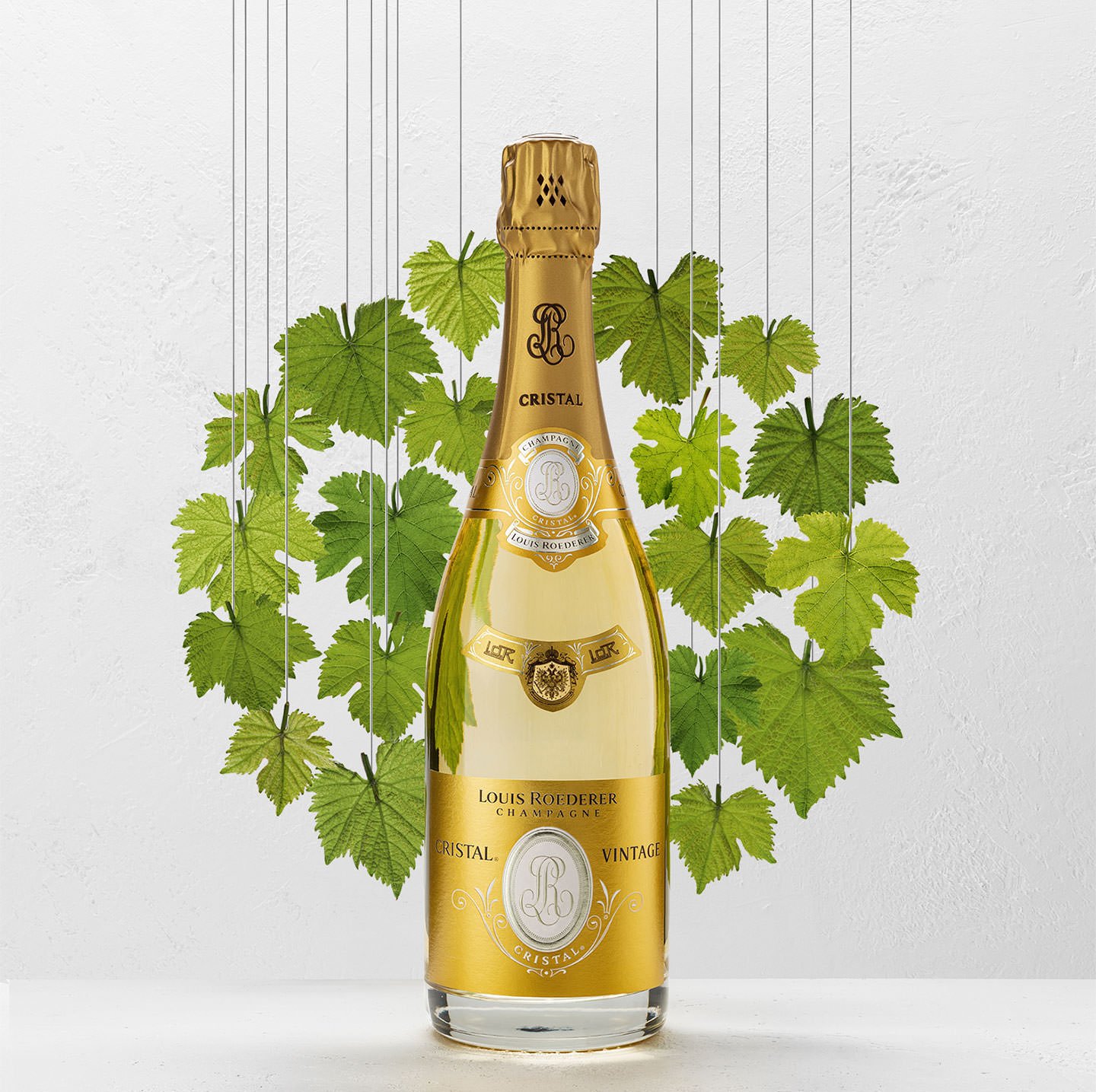
Founded in 1776 as Dubois Père & Fils, this famous house acquired its present name in 1833, when Louis Roederer took charge of the firm. Under his direction the business expanded considerably, particularly in the lucrative Russian market, and by 1872 the house’s sales had grown to an astounding 2.5 million bottles a year, which accounted for one-tenth of Champagne’s total production at the time. The house was to achieve even greater fame in 1876 when Roederer’s son, also named Louis Roederer, invented the legendary Cristal, packaging it in a clear crystal bottle as an exclusive cuvée for Tsar Alexander II.
Unfortunately, the house’s principal market was to vanish overnight with the Revolution of 1917, and it would take several decades to recover. Camille Olry-Roederer took control of the house in 1932, following the death of her husband Léon Olry-Roederer, the nephew of Louis Roederer II, and under her direction the house not only rebounded but established itself as one of the most important in Champagne. Olry-Roederer would manage the house with great energy and vivacity for over 40 years, and upon her death it passed into the hands of her daughter, and then in 1979 to her grandson Jean-Claude Rouzaud. Rouzaud continued to expand the house’s production and sales, and also to acquire other wine properties, establishing a group that today includes the Champagne house of Deutz as well as other top estates around the world, such as Roederer Estate, Scharffenberger, Domaine Anderson, Merry Edwards, and Diamond Creek Vineyards in California, Château Pichon-Longueville Comtesse de Lalande and Château de Pez in Bordeaux, Domaines Ott in Provence, Delas Frères in the Northern Rhône, Ramos-Pinto in the Douro, and most recently Domaine Pierre Damoy in Burgundy. Since 2006, his son Frédéric Rouzaud has taken over the reins. Roederer's chef de cave is Jean-Baptiste Lecaillon, who has been with the house since 1989 and at the helm since 1999.
Roederer owns approximately 250 hectares of vines divided among more than 420 individual plots, exclusively located in the Grands and Premiers Crus of the Montagne de Reims, Vallée de la Marne, and Côte des Blancs.
These vineyards account for 70 percent of the house’s total needs, an astonishingly high figure that undoubtedly contributes to the quality and consistency of Roederer’s wines. The estate’s vineyards supply all of the fruit required for its vintage champagnes, including Cristal, while the multi-vintage Collection cuvée combines estate-grown fruit with grapes sourced from long-standing partner growers.
Roederer has been a pioneer of environmentally responsible viticulture in Champagne for more than two decades. The house stopped using herbicides around the turn of the century and has progressively introduced organic and biodynamic methods, massal selection, organic composts, long fallow periods, hedgerows, cover crops and horse-drawn cultivation in selected parcels. As of the latest published figures, 135 hectares are certified organic, representing more than half of the estate and making Louis Roederer the largest organically certified vineyard holding in Champagne. The balance of the estate is progressively being converted to organic farming.
Information courtesy of Peter Liem's ChampagneGuide.net © and Maisons Marques & Domaines

Presenting the following wines*:
Apéro au Champagne • Friday, 10/16
Collection 244 MV en magnum
New York City Grand Tasting • Saturday, 10/17
Collection 246 MV
Blanc de Blancs 2019
Brut Rosé 2018
Cristal 2018
*Wines and vintages are subject to change